
Description
Cochlospermum gillivraei – Australian Kapok
Family: Bixaceae
Packet Size: 10 seeds
Description
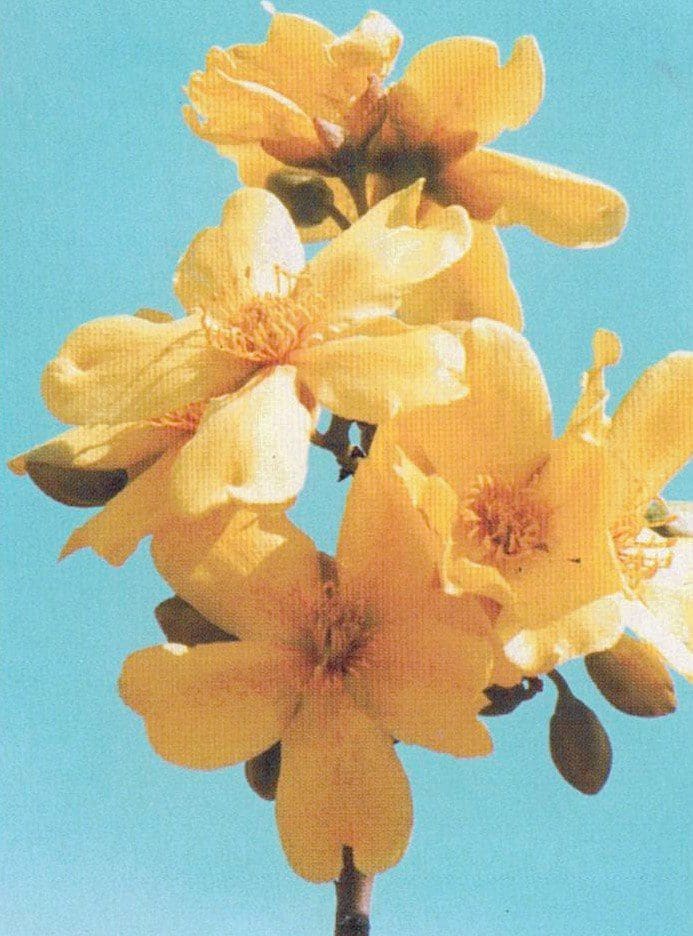
Cochlospermum gillivraei, commonly called Australian Kapok or Kapok Bush, is a distinctive deciduous native tree from northern Queensland and the Northern Territory. Large, bright golden-yellow flowers with reddish stamens appear in the dry season, often before new leaves emerge.
The tree develops smooth pale bark and broad, palmately lobed leaves with five to seven lobes. After flowering, rounded capsules split to release dark seeds nestled in white cotton-like fibres. It is an attractive specimen for warm, sunny gardens with excellent drainage.
Key Features
- Flowers: Large yellow, five-petalled blooms, often around 10 cm across, displayed prominently on mostly leafless branches.
- Foliage: Distinctive broad, deeply lobed leaves that are shed during the dry season.
- Habit: Deciduous small to medium tree, commonly about 3–12 m depending on site.
- Fruit: Rounded capsules containing dark seeds surrounded by silky, cotton-like fibres.
- Garden uses: Feature tree in tropical and warm subtropical gardens; striking seasonal flower display.
Growing Conditions
- Position: Full sun in a warm, sheltered location.
- Soil: Free-draining, sandy, rocky or well-structured soils; avoid persistently wet ground.
- Watering: Keep seedlings evenly moist during establishment, but let the top of the mix begin to dry between waterings once plants are stronger.
- Climate: Best suited to tropical and very warm subtropical areas; protect from frost.
- Space: Provide enough room for the spreading canopy and seasonal leaf drop.
Seed Propagation
- Prepare: Remove any remaining cottony fibres and place sound seed in a heat-tolerant container.
- Pre-treat: Hot-water soaking may improve germination: pour recently boiled water that has been taken off the heat over the seeds, allow it to cool naturally, and soak for up to 24 hours. Do not boil the seed.
- Sow: Sow in a well-drained seed-raising mix, lightly covering to approximately the thickness of the seed.
- Position: Keep warm in bright, protected conditions, ideally in tropical or warm-season temperatures.
- Water: Maintain gentle, even moisture without waterlogging; germination may be variable.
- Pot on: Transplant young plants into sufficiently deep pots to accommodate developing roots, and harden off before planting.
Reviews
There are no reviews yet.