
Description
Casuarina glauca – Swamp Oak
Family: Casuarinaceae
Packet Size: 10 seeds
Description
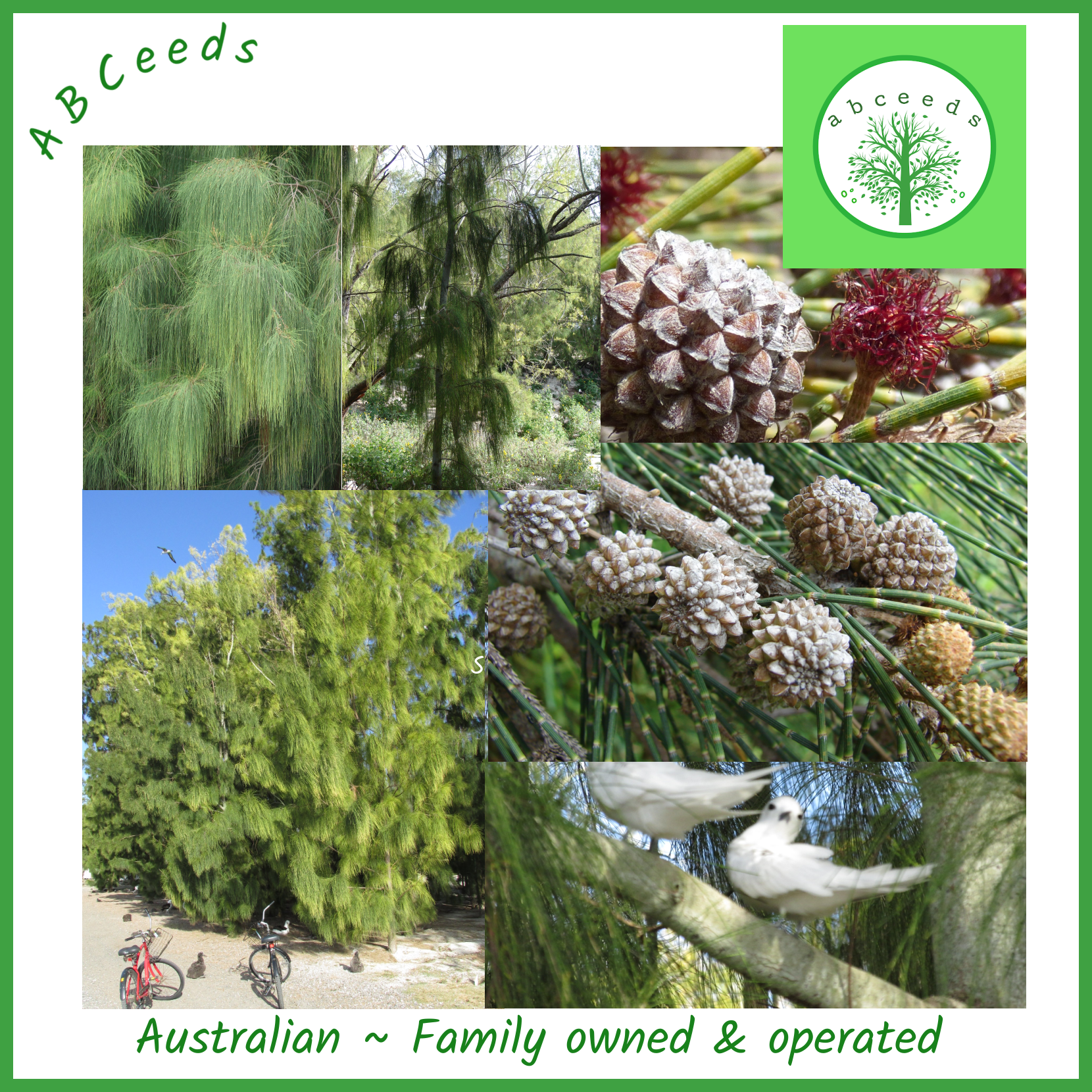
Casuarina glauca, commonly known as Swamp Oak or Swamp She-oak, is a fast-growing Australian native tree found along estuaries, waterways and coastal wetlands from Queensland to New South Wales. Its green, finely jointed branchlets give the tree a soft, needle-like appearance.
Although it resembles a pine, Swamp Oak is a flowering plant, not a conifer. Small flowers are followed by woody cone-like seed structures, and its dense root system can spread by suckers. It is useful as a shelter or restoration tree where the species is locally suitable and there is room for its mature size.
Planting note: This can become a large, suckering tree. Check local provenance and site suitability if planting for bush regeneration.
Key Features
- Foliage: Fine, articulated, grey-green to green branchlets; the true leaves are tiny scales at each joint.
- Habit: Vigorous evergreen tree, potentially reaching about 10–20 m in favourable sites and producing root suckers.
- Fruit: Small woody, cone-like structures that release winged seeds.
- Tolerance: Adaptable to saline soils, coastal winds, periodic inundation and moist heavier ground once established.
- Uses: Suitable for larger properties, windbreaks and carefully planned coastal or wetland revegetation.
Growing Conditions
- Position: Full sun in an open location.
- Soil: Thrives in moist sandy, alluvial and heavier soils; tolerates some salinity and seasonal waterlogging.
- Watering: Water regularly through seedling establishment, then adjust to local rainfall and site drainage.
- Climate: Suited to eastern Australian coastal temperate and subtropical conditions.
- Space: Allow substantial space for roots and canopy; avoid planting near pipes, paving or restricted garden beds.
Seed Propagation
- Prepare: Use a fine, free-draining seed-raising mix in a shallow tray or small pots. Moisten before sowing.
- Sow: Spread the small winged seeds thinly on the surface and cover with only a very fine layer of sieved mix, around 2–5 mm.
- Water: Mist gently or water from below so the light seeds are not washed out of place.
- Position: Keep in a warm, bright, sheltered place with filtered light while seedlings establish.
- Moisture: Maintain even moisture without saturating the compost. No special nicking or scratching the seed coat or boiling-water treatment is normally required.
- Transplant: When seedlings have developed enough roots to handle, transplant carefully into individual pots and gradually introduce to outdoor conditions.
Germination advice: These instructions are a recommended guide. Germination results and timing may vary depending on seed freshness, storage, temperature and growing conditions. Alternative propagation methods may also be successful.

Reviews
There are no reviews yet.