
Description
Grevillea robusta – Australian Silky Oak
Family: Proteaceae
Packet Size: 8 seeds
Description
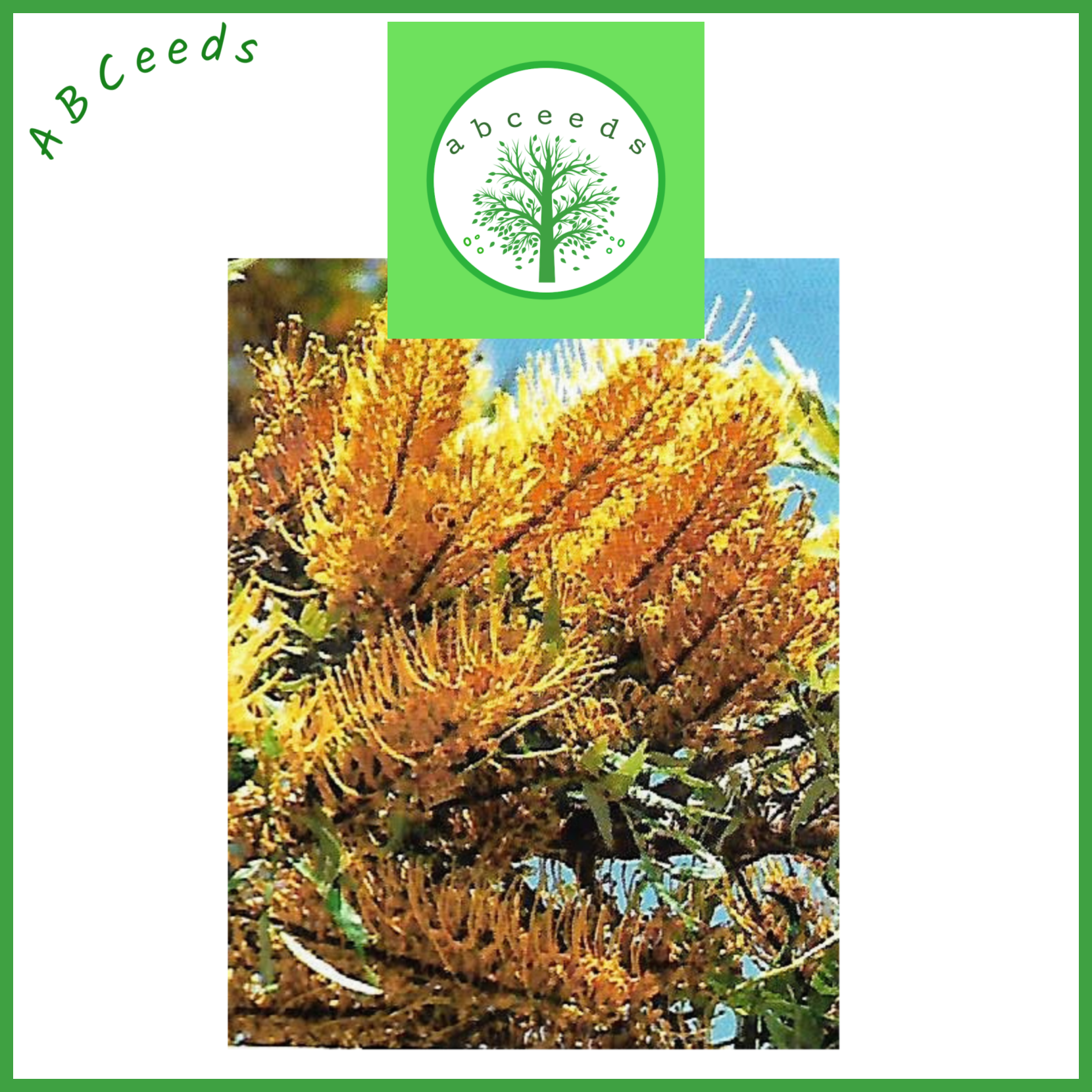
Grevillea robusta, known as Silky Oak or Southern Silky Oak, is a magnificent Australian native tree from subtropical rainforest and nearby forest habitats of south-east Queensland and north-east New South Wales. This is the true large Silky Oak timber tree, distinct from the shrubby Banks’ Grevillea sometimes called Red Silky Oak.
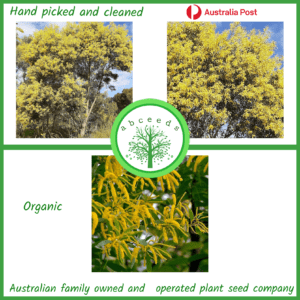
It is prized for elegant, fern-like pinnate foliage and spectacular golden-orange toothbrush-like flower clusters, often displayed from spring into early summer. In favourable conditions it can grow into a substantial shade tree reaching around 20–30 m tall, making it most suitable for large gardens, parks and rural properties. Its nectar-rich flowers provide food for birds and other wildlife.
Key Features
- Flowers: Brilliant golden-orange clusters, usually seen in spring to early summer.
- Foliage: Deeply divided, fern-like green leaves with paler undersides.
- Habit: Vigorous, upright tree; allow substantial space above and below ground.
- Uses: Feature tree, wildlife habitat and historically prized timber.
Growing Conditions
- Light: Best in full sun once established.
- Soil: Adaptable to a range of soils if drainage is adequate; avoid prolonged waterlogging.
- Climate: Suitable for many temperate-to-subtropical sites; shelter seedlings from strong frost.
- Care: Water regularly while young and choose a permanent site well away from buildings and overhead wires.
Propagation from Seed
- Prepare: Fresh, mature seeds generally germinate readily and do not usually need complicated pre-treatment.
- Sow: Use a clean, free-draining seed-raising mix. Sow shallowly and cover with a fine layer of mix.
- Moisture: Keep evenly moist and place in a warm, bright position protected from harsh drying sun.
- Pot on: Transfer seedlings to individual pots once large enough to handle, then harden off gradually before planting.
Germination advice: These instructions are a recommended guide. Germination results and timing may vary depending on seed freshness, storage, temperature and growing conditions. Alternative propagation methods may also be successful.
Reviews
There are no reviews yet.