
Description
Acacia linifolia – White Wattle
Family: Fabaceae
Packet Size: 30 seeds
Description
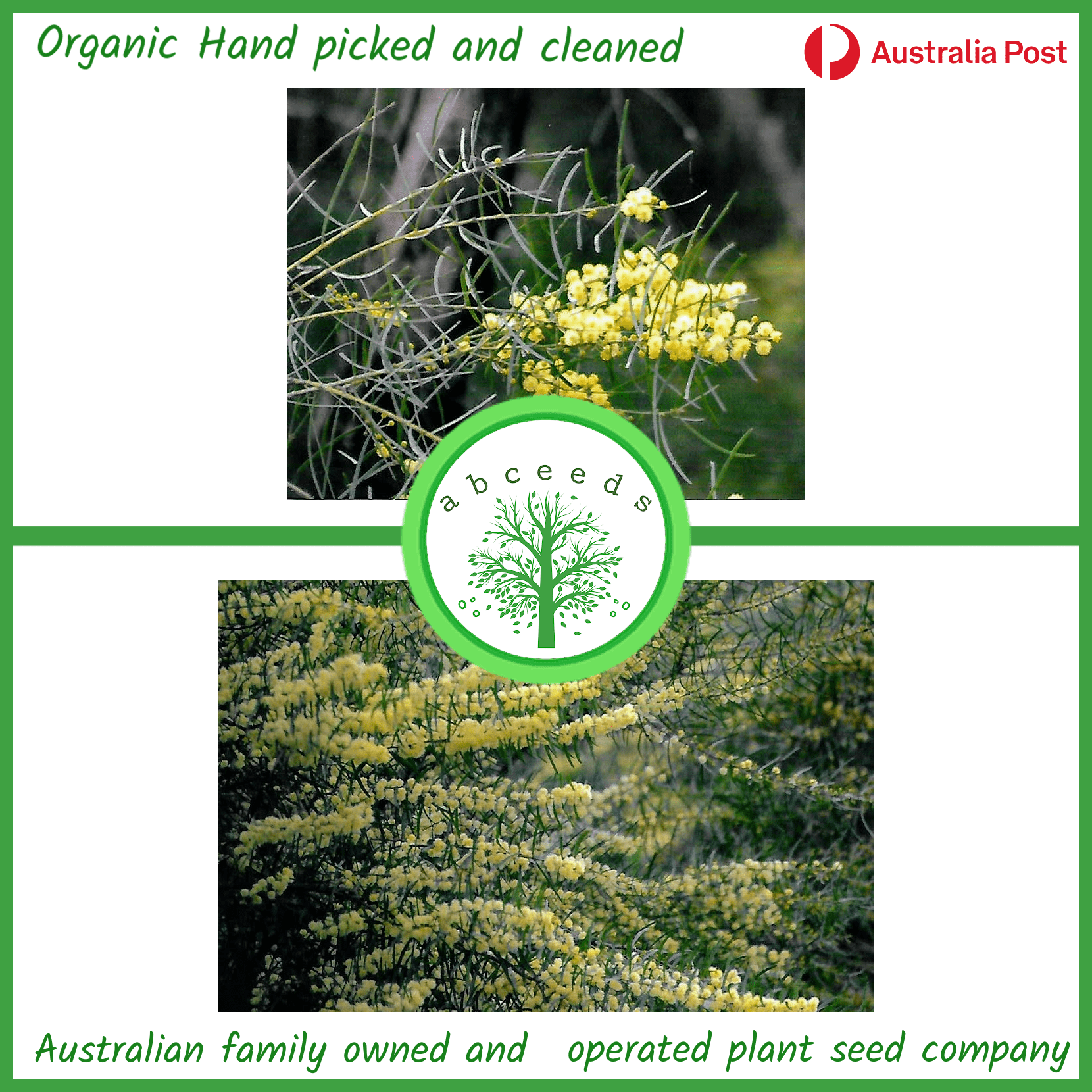
Acacia linifolia, known as White Wattle or Flax-leaved Wattle, is a graceful eastern Australian shrub with fine, slender foliage and an open, arching growth habit. It is particularly associated with sandstone country in New South Wales.
Clusters of small cream-white to pale-yellow ball-shaped flowers sit among the narrow green leaves. Flowering can occur at different times of year, creating a delicate display that contrasts with the larger golden blooms of many other wattles.
Key Features
- Flowers: Small cream-white to pale-yellow globular heads on slender flower stalks.
- Foliage: Very narrow green leaves with a fine, flax-like appearance.
- Habit: Open to spreading shrub, commonly around 1.5–4 m high.
- Garden uses: Fine-textured feature plant, informal shrub border and naturalistic native garden.
Growing Conditions
- Position: Full sun to light shade.
- Soil: Well-drained soil is important; the species occurs naturally on sandy sandstone-based sites as well as some clay soils.
- Watering: Water regularly until established, then according to local rainfall and soil conditions.
- Climate: Most naturally associated with the Sydney and nearby New South Wales region.
- Pruning: Light shaping after flowering may improve density while retaining the airy habit.
Seed Propagation
- Prepare: Wattle seeds usually have a hard, water-resistant coat. Lightly rub one side with fine sandpaper or carefully nick the seed coat without harming the embryo. Soak in room-temperature water for around 12–24 hours before sowing.
- Sow: Sow seeds about 5 mm deep in a clean, freely draining seed-raising mix.
- Position: Keep in a warm, bright, sheltered place; protect young seedlings from harsh direct midday sun.
- Moisture: Keep the mix consistently moist but not waterlogged.
- Germination: Timing varies with temperature, seed age and nicking or scratching the seed coat. Allow additional time for any seeds whose coats have not softened.
- Transplant: Move seedlings into individual pots once they have true leaves and can be handled without damage.
Growing Note: Its flowers are typically cream to very pale yellow; the common name White Wattle refers to the flowers, not white foliage.

Reviews
There are no reviews yet.