
Description
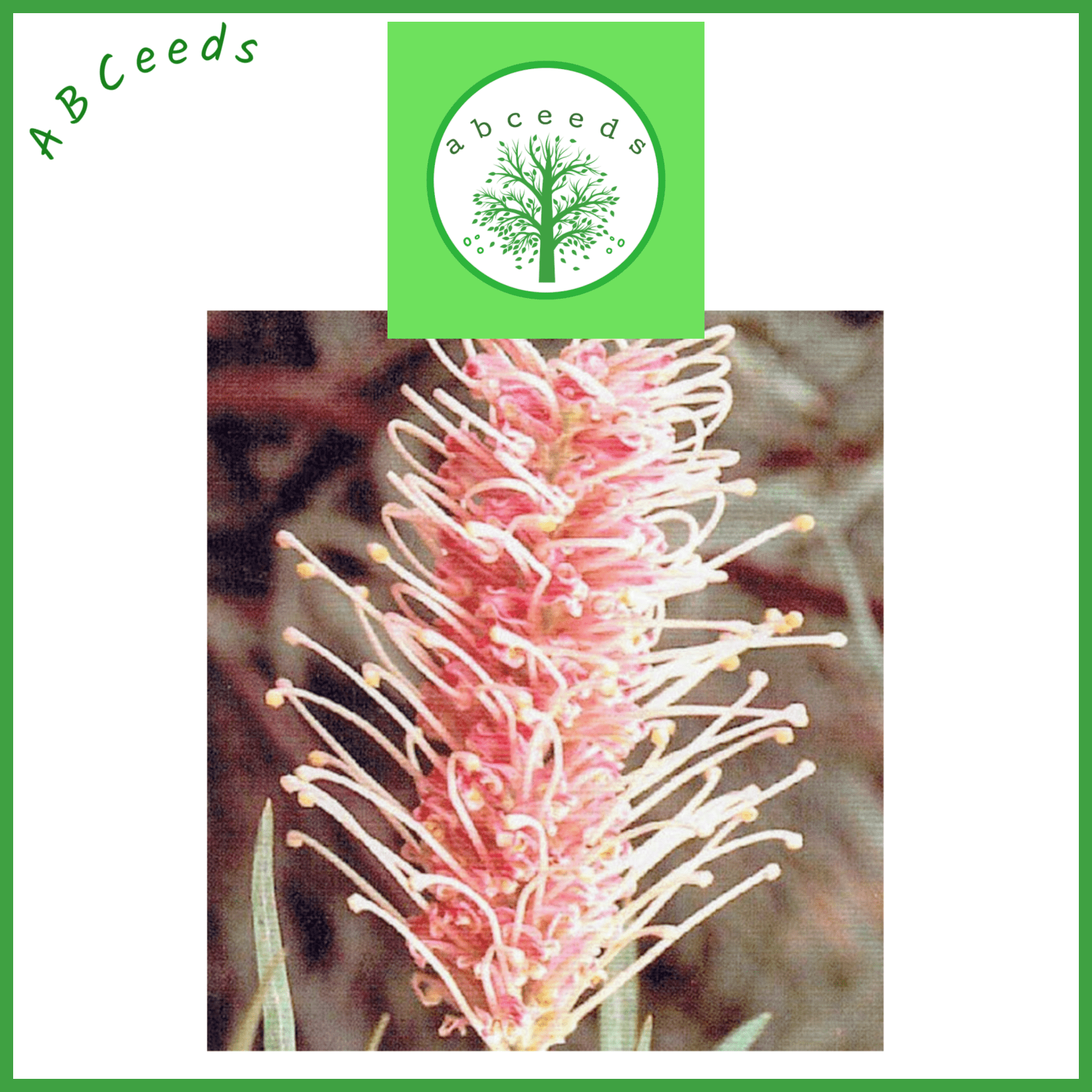
Grevillea ‘Misty Pink’ – Pink and Cream Flowering Hybrid
Family: Proteaceae
Packet Size: 8 seeds
Description
Grevillea ‘Misty Pink’ is a well-known Australian-bred ornamental hybrid, generally described as a cross between Grevillea banksii and Grevillea sessilis. The parent cultivar has softly coloured pink flowers with creamy styles arranged in long, showy brushes above delicately divided, grey-green foliage.
The parent plant usually develops into an open, rounded shrub around 2–3 m tall and about 2.5–3 m wide in favourable conditions. Flowers can appear over a long season, often with a strong flush in late winter and spring, providing nectar for native birds and pollinating insects.
Key Features
- Parent flowers: Long pink flower clusters with contrasting cream styles.
- Foliage: Attractive grey-green, deeply divided leaves.
- Garden use: Colourful native feature planting, mixed shrubbery or informal screen.
Growing Conditions
- Light: Sunny, open position for abundant flowering.
- Soil: Excellent drainage is important; avoid phosphorus-rich fertilisers.
- Climate: Best in warm to mild climates, with established plants tolerating some cool conditions.
- Care: Water while young and prune periodically if growth becomes loose or untidy.
Propagation from Seed
- Prepare: If the seed coat is hard, a slight nick or gentle abrasion can be tried on a few seeds; take care not to injure the embryo.
- Sow: Use a clean, free-draining native seed mix and cover seed lightly.
- Conditions: Keep moist rather than wet in a sheltered, bright position. Germination may occur unevenly.
- Pot on: Transplant after roots develop and acclimatise gradually before planting.
Seed-Grown Variation
‘Misty Pink’ is a hybrid cultivar. Seedlings can flower in different shades, including pink or white, and may not match the parent plant’s shape or foliage.
Germination advice: These instructions are a recommended guide. Germination results and timing may vary depending on seed freshness, storage, temperature and growing conditions. Alternative propagation methods may also be successful.
Reviews
There are no reviews yet.