
Description
Hymenosporum flavum – Native Frangipani
Family: Pittosporaceae
Packet Size: 10 seeds
Description
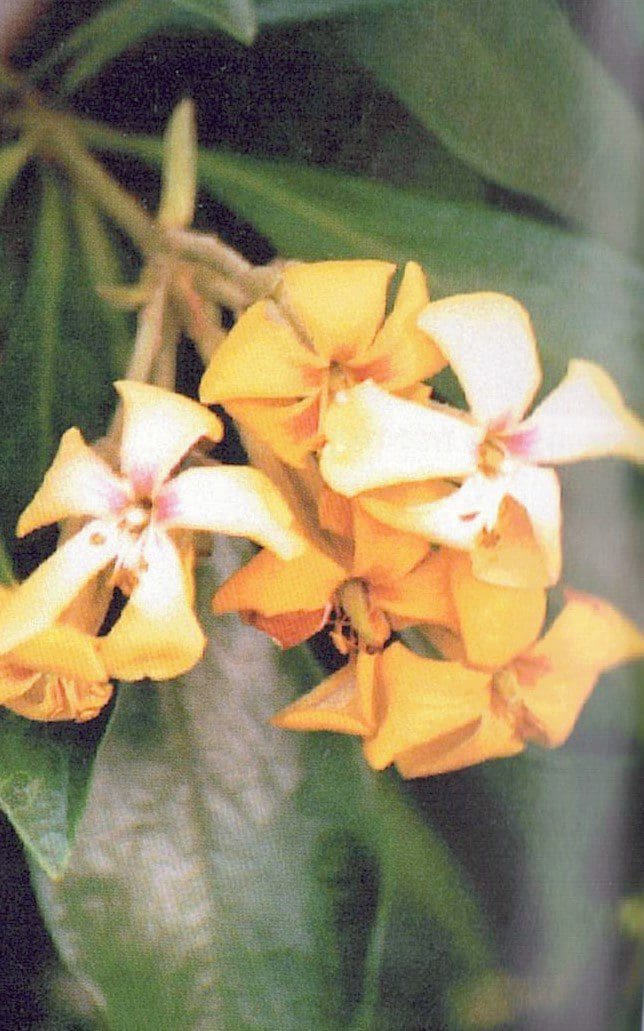
Hymenosporum flavum, commonly called Native Frangipani, is an elegant Australian rainforest tree loved for its beautifully scented flowers. The blossoms begin creamy white and deepen to buttery or golden yellow, creating a two-tone display among glossy green leaves.
Unlike the unrelated tropical frangipani (Plumeria), Native Frangipani belongs to the Pittosporaceae family. It often forms a fairly narrow upright tree in cultivation, although mature specimens in suitable rainforest conditions can become much taller. Its fragrance and refined form make it an appealing feature for gardens with space to grow.
Key Features
- Flowers: Sweetly perfumed cream blooms that mature to yellow, often appearing in spring.
- Foliage: Glossy green leaves and an attractive upright form.
- Habitat value: Flowers provide nectar for visiting insects and other pollinators.
Growing Conditions
- Light: Full sun to part shade; flowering is strongest with good light.
- Soil: Fertile, organically enriched, freely draining soil that holds some moisture.
- Climate: Suits many mild temperate and subtropical locations; shelter seedlings from extreme exposure.
- Care: Water during establishment, mulch the root zone and allow room for mature height.
Propagation from Seed
- Seed: Use viable seed; fresh seed commonly gives reliable results. The dry capsules contain flat, winged seeds rather than fleshy fruit.
- Prepare: An optional soak in clean room-temperature water for up to 24 hours can help moisten the seed.
- Sow: Lay seeds flat on a moist, free-draining raising medium and cover lightly.
- Germinate: Keep warm and evenly moist in bright filtered light; germination can take several weeks.
- Pot on: Transfer established seedlings carefully to individual pots and acclimatise them gradually.
Germination advice: These instructions are a recommended guide. Germination results and timing may vary depending on seed freshness, storage, temperature and growing conditions. Alternative propagation methods may also be successful.
Reviews
There are no reviews yet.