
Description
Melaleuca viridiflora – Broad-leaved Paperbark
Family: Myrtaceae
Packet Size: Approx. 500+ seeds
Description
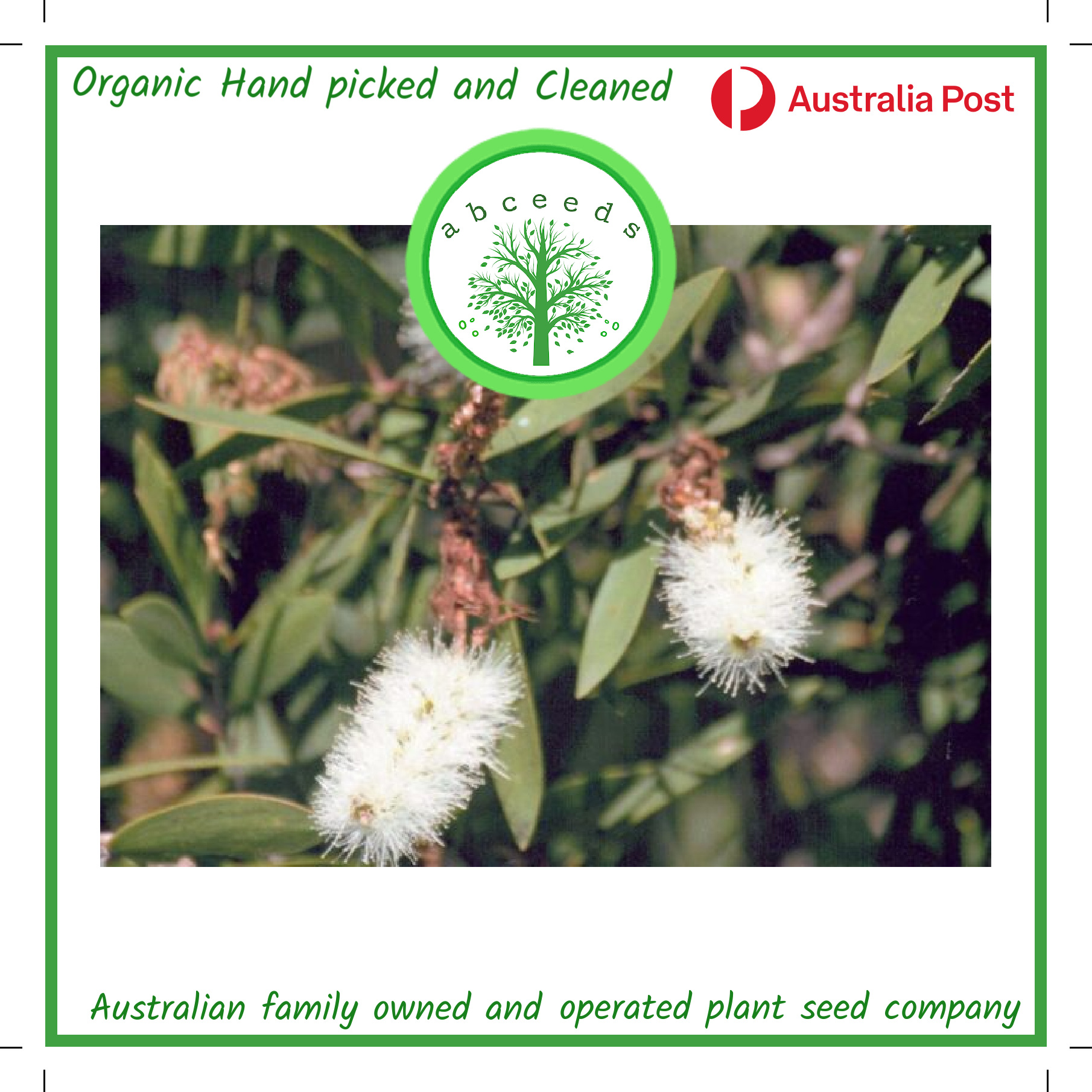
Melaleuca viridiflora is a distinctive broad-leaved paperbark from tropical northern Australia and New Guinea. Its open, branching habit, pale papery bark and large leathery leaves give it a bold landscape presence. Most plants bear cream to greenish-cream flower spikes, although naturally occurring pink and red forms are also known.
Found in seasonally wet woodland, savanna and streamside habitats, it commonly grows as a small to medium tree around 3–10 m high. This seed offering has been labelled as a pale-flowering form and suits tropical and warm subtropical landscapes with room to mature.
Key Features
- Foliage: Broad, leathery dark-green leaves with visible lengthwise veins.
- Flowers: Dense cylindrical spikes, commonly cream to greenish-cream, attractive to nectar visitors.
- Bark: Layered, greyish to pale paperbark with a sculptural trunk.
Growing Conditions
- Light: Full sun to light shade.
- Soil: Adaptable to seasonally wet, heavy or freely draining soils with sufficient moisture during establishment.
- Climate: Best suited to tropical and warm subtropical sites; protect from hard frost.
- Care: Water while establishing and allow space for a naturally open canopy.
Propagation from Seed
- Prepare: This fine seed does not require nicking or hot-water treatment.
- Sow: Spread thinly over moistened free-draining seed mix and press gently onto the surface.
- Germinate: Maintain warmth, bright filtered light and consistent moisture without saturating the mix.
- Pot on: Carefully transplant rooted seedlings and acclimatise to stronger light.
Seed-Grown Variation
Most plants of this species are pale-flowered, but flower colour varies naturally across the species. The exact colour of an individual seed-grown tree cannot be guaranteed.
Germination advice: These instructions are a recommended guide. Germination results and timing may vary depending on seed freshness, storage, temperature and growing conditions. Alternative propagation methods may also be successful.
Reviews
There are no reviews yet.